
You’ll need to rethink how people find brands: future advertising will focus on AI-driven recommendations, shoppable moments, and creators who build real trust rather than on follower totals.
Campaigns will run thousands of small tests, tailor creative for individual viewers at scale, and appear in commerce-first spots across apps and devices.
That shift changes strategy, measurement, and creative operations — so where should you begin?
Custom quote:
“Start by mapping the moments when people are ready to buy, then build tests that prove which creative and placement turn intent into purchase.”
Key Takeaways
- Algorithmic discovery ecosystems (For You/Explore) replace keyword search with behavior-driven placements that prioritize dwell, shares, and interest graphs.
- AI-personalized advertising segments and predicts intent to deliver millions of hyper-relevant micro-ads at scale.
- Social commerce and creator-led shopping integrate discovery and checkout, turning engagement into instant transactions.
- Creative experimentation prioritizes authentic, lo-fi formats and rapid AI-driven A/B testing over uniform brand templates.
- Sustainability and values-driven campaigns with verified ESG metrics build long-term trust and differentiation.
The Rise of AI-Personalized Advertising
AI-driven personalization is reshaping how brands reach you by using machine learning to segment audiences, predict purchase intent, and craft customized messages at scale. You’ll see AI split customers into behavior-based groups by demographics, location, travel patterns, and interests to target ads more precisely. Predictive models flag likely purchasers so budgets go where they’ll convert, whereas generative tools produce many personalized creatives quickly. When AI tailors CTAs and content to your habits, engagement and spending rise—businesses report sizeable lifts and consumers report greater satisfaction. Inclusive datasets and CRM integration let campaigns address diverse needs and build loyalty, though fragmented data and privacy rules remain obstacles. Measurement tools then refine campaigns, closing the loop between insight and action. AI also enables platforms to run thousands of micro-optimizations per second to improve outcomes micro ad optimization.
Social Commerce and the New Influencer Economy
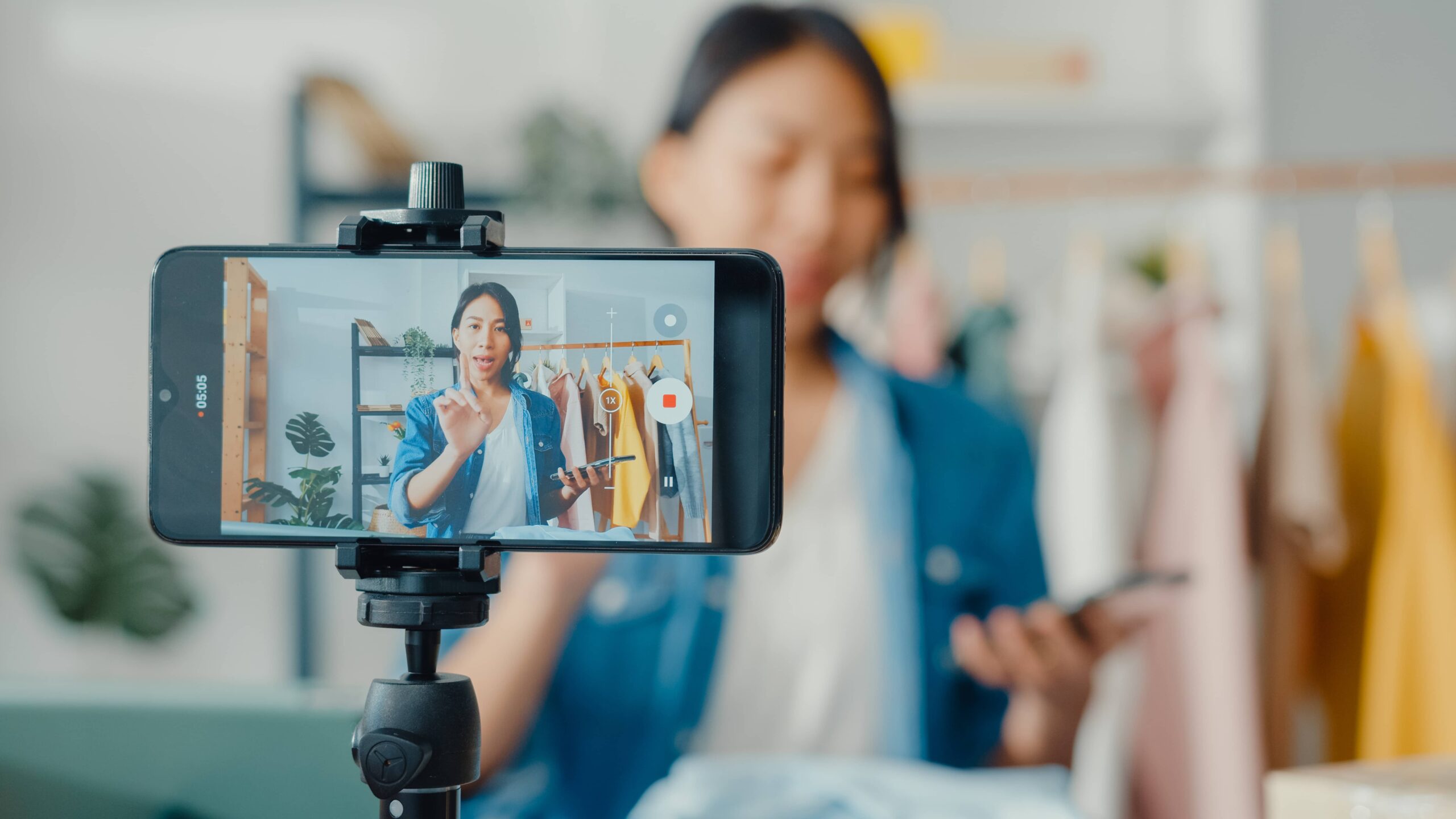
Social commerce has exploded into a primary shopping channel, letting you uncover, assess, and buy products without leaving your favorite apps. You’re part of a market set to hit nearly $80 billion in U.S. retail by 2025 and join a global ecosystem topping $1.26 trillion in 2024. About 18.5% of ecommerce now runs through social platforms, with 106.7 million U.S. social shoppers in 2023 and more coming. You’ll rely on Facebook, Instagram, TikTok and niche sites like Pinterest and YouTube for discovery—especially if you’re 18–34, where 73% already buy via social. Influencers, especially micro and nano creators, accelerate trust and conversions through embedded shopping, live events, and targeted, high-engagement recommendations. Platforms are increasingly integrating shoppable posts to reduce checkout friction and boost impulse purchases.
Creative Experimentation Over Brand Uniformity
Cut through the noise by swapping rigid brand templates for bold creative experiments that speak directly to how your audience thinks and feels. You’ll favor lo-fi authenticity, humor, music and culturally tuned references over polished uniformity to land emotional relevance. AI accelerates iteration: you can test variants in real time, measure incremental lift, and scale winners as humans vet tone. Creative data now feeds longer-term econometric models, shifting evaluation beyond short-term sameness metrics. Prioritize small, audacious bets that mimic user-generated formats and cut cognitive load. Consider these core actions:
- Run rapid lab-style A/B tests on raw creative.
- Use AI to generate and score variants, with human review.
- Lean into demographic-specific humor and sound.
- Fold creative metrics into mix modeling.
AI also enables the generation of thousands of tailored ad variants for different segments, supporting hyper-personalized creative.
From Search Engines to Social Discovery Ecosystems
When you move beyond keyword queries, uncovering shifts from intent-based search to feeds that surface content through behavior, interests, and networks—so brands need to meet people where they’re already engaging. You’ll shift from chasing queries to crafting presence inside algorithmic discovery: Explore and For You pages, interest and social graphs, and programmatic placements that blend natively into feeds. Focus on relationship-building content that sparks shares and dwell time, not just clicks. Use interest graphs to target niche passions and social graphs to harness connections, then scale via programmatic buying for precision and real-time optimization. Design integrated content ecosystems that sustain visibility and boost earned reach, measuring performance continuously to reallocate spend toward what actually surfaces in discovery. Platforms’ algorithms act as personalized curators by surfacing content based on behavior, so marketers must optimize for algorithmic curation.
Sustainability and Values-Driven Campaigns
Since sustainability now molds buying decisions and corporate strategy alike, brands can’t treat green messaging as an afterthought or PR stunt. You’ll need to embed measurable ESG actions across advertising—set science-based targets, publish transparent reports, and show how media choices cut emissions. Consumers, especially Gen Z and Millennials, will pay more for authentic commitments and will call out greenwashing.
Sustainability must be measurable across advertising—set science-based targets, report transparently, and prove media choices reduce emissions.
- Prioritize verified claims and disclose ad-related emissions.
- Use SPO/DPO, creative asset optimisation, and low-GHG production.
- Incorporate sustainability into product, finance, and operations, not just marketing.
- Track performance: brand value, revenue impact, and ESG metrics.
Do this and your campaigns will shift from rhetoric to demonstrable value, building trust and long-term growth. Brands that combine honest storytelling with technology-enabled targeting can reach eco-conscious audiences more efficiently, reflecting a broader shift toward dialogue with the consumer built on trust.